Blog

  • Whispers in the Forest

    Whispers in the Forest

    Lena’s heart pounded, thrumming loud against the silence of the dense forest. She stumbled over roots in her desperation, lost after taking a wrong turn during her afternoon hike. Panic clung to her like the damp chill of the evening mist that wove between the towering pines. Hours passed with only the encroaching darkness to keep her company. Her phone had died hours ago, and the last of the sun’s light was rapidly fading.

    “Okay, Lena, think,” she whispered to herself, trying to summon any ounce of calm she could muster.

    That’s when she first heard it—a soft, persistent rustle, as if the forest itself was whispering secrets. Her heart leapt, fearing it was some predator lurking, but the sound was wrong for that. Cautiously, Lena followed the noise, driven by a strange, instinctual pull.

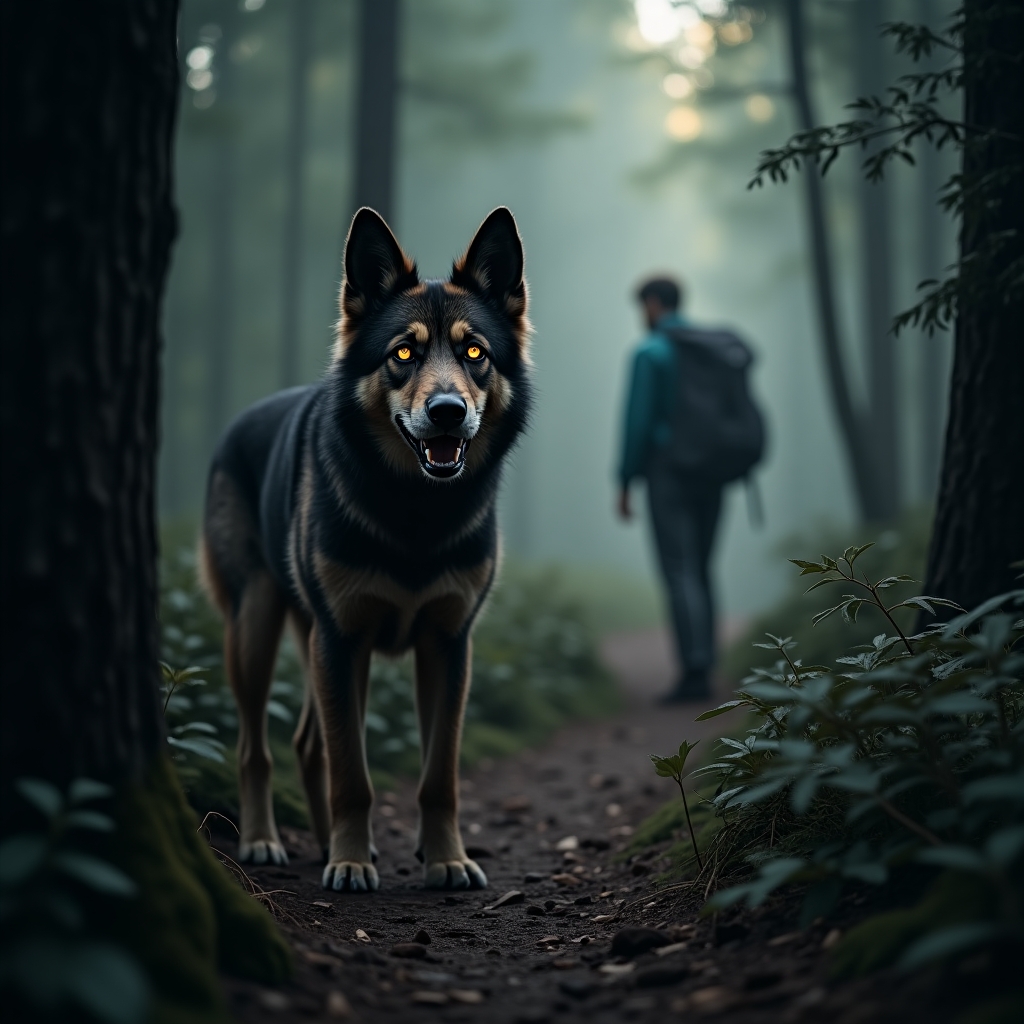
    Amidst the shadows, a pair of gleaming eyes appeared, reflecting the scatter of starlight that peeked through the canopy. Her breath caught in her throat—a large, wild-looking dog stood between the trees, watching her. Its coat was a patchwork of browns, blending effortlessly into the background.

    “Hey, boy,” she croaked, trying to sound soothing despite her own uncertainty. “Lost too?”

    The dog tilted its head, as though considering her words, then turned with a quick flick of its tail. It took a few steps and paused, looking back at Lena expectantly.

    “You want me to follow you?” she asked incredulously.

    The dog barked softly, a sound like laughter, and trotted ahead. With little choice and hope kindling within her chest, Lena followed. The dog’s pace was steady, neither too fast nor too slow, as if it knew her exhaustion.

    Time seemed to blur as they moved through the forest, the dog’s presence a strange comfort against her anxiety. She could now hear the distant gurgle of water—a stream she hadn’t dared hope for.

    When she finally reached it, she fell to her knees, scooping the icy water with trembling hands. “Thank you,” she breathed, her voice choked with gratitude. The dog watched her, its eyes reflecting a knowing intelligence.

    The night wore on, and Lena managed to light a small fire with the last matchbook in her backpack. She and the dog sat by the flames, warmth spreading through her limbs. Her clothes steamed gently, drying in the heat. “You’re a lifesaver, you know that?” she said, the tight band of fear in her chest loosening at last.

    The dog nudged her hand with its nose, its tail wagging slowly. In its presence, she felt not alone but connected—an understanding passed between them that needed no words.

    When morning light filtered through the trees, Lena woke to find herself still cradling the dog’s warm presence beside her. She rose, stretching, and saw that they had camped not far from a well-marked trail leading back to safety.

    She knelt beside her savior, tears welling up in her eyes. “Thank you,” she murmured again, wrapping her arms around the dog. In response, it licked her face and then bounded a few steps away, looking back as if to say goodbye.

    Lena watched as it disappeared into the trees, her heart full of gratitude. As she found her way back to safety, she knew she owed her life to that unexpected guardian of the woods, a bond forged in the silence of the night.
  • The Chains of Control: Breaking Free from Gran’s Grip

    The Chains of Control: Breaking Free from Gran’s Grip

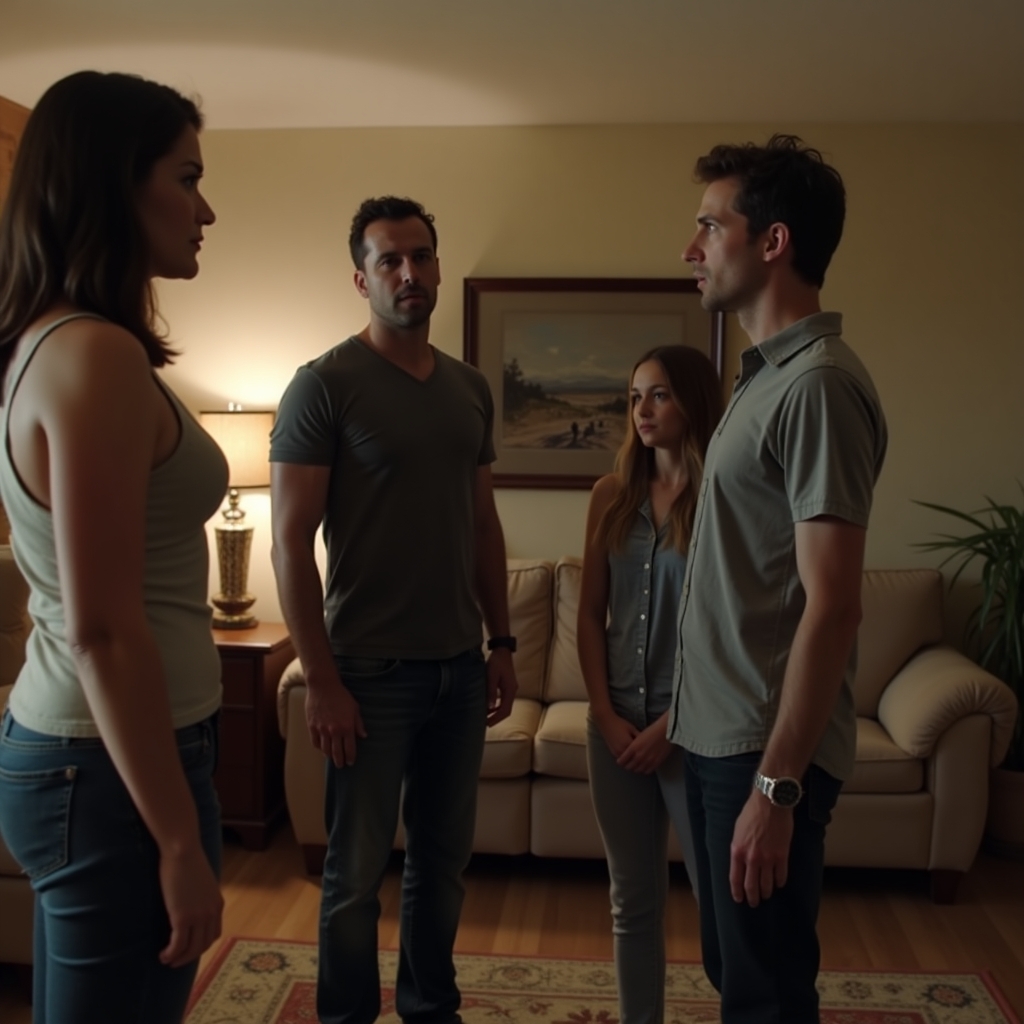
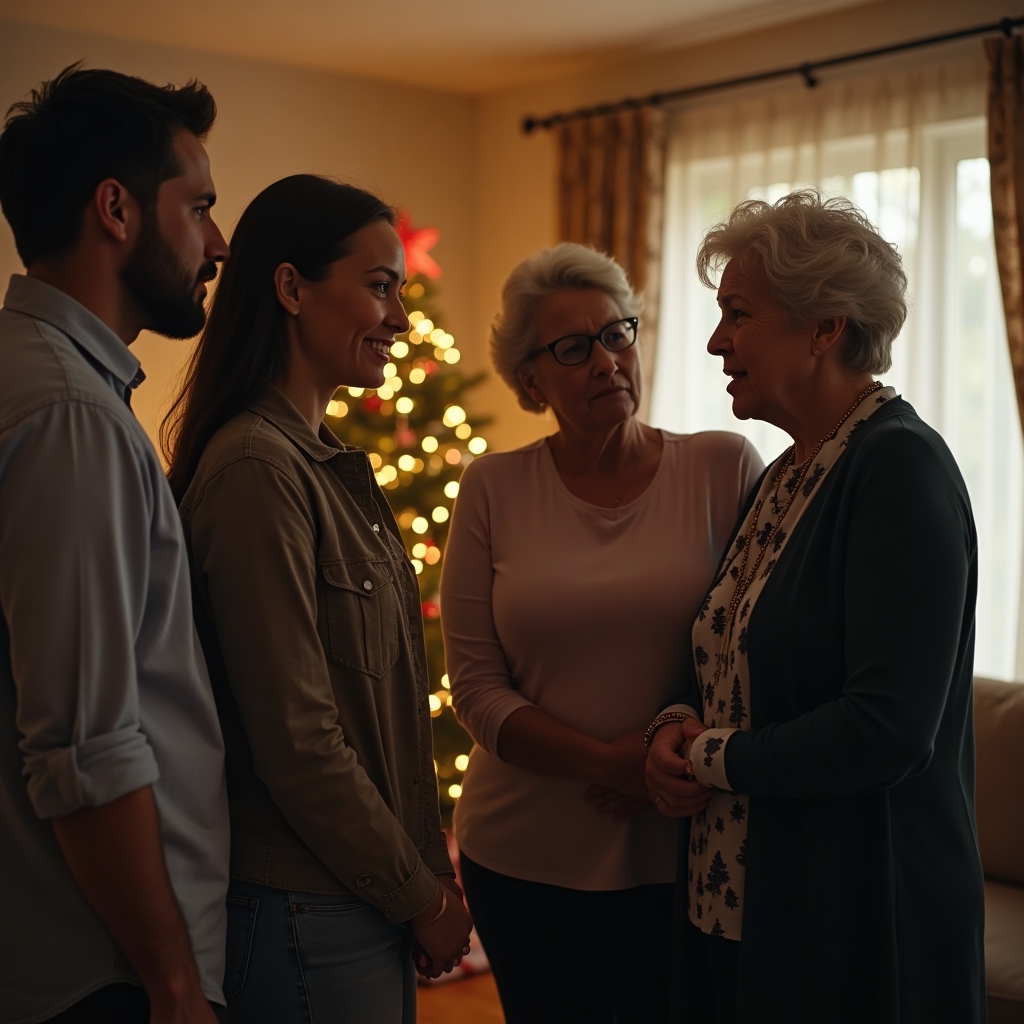
    “Cancel the trip. It’s our tradition to have Christmas at Gran’s,” Susan demanded, her voice slicing through the festive anticipation like a cold knife.

    I sighed, biting back the immediate retort that danced on my tongue. Instead, I glanced at my husband, Paul, who sat tense and silent beside me. His fingers drummed a nervous rhythm on the arm of his chair.

    For years, our family had deferred to Gran’s wishes, bending our schedules and lives to fit her vision of what holidays should be. But this year was supposed to be different. We’d planned a small, intimate Christmas at our own home, just us and our two daughters.

    Gran’s demands were nothing new – we had missed anniversaries, birthdays, even the first snowfall of the season, all in the name of keeping peace with her. But this was a step too far. Even the girls had been brimming with excitement over our plans.

    “Gran,” I started, keeping my tone gentle, “the girls were really looking forward to having Christmas here this year.”

    She waved a dismissive hand. “Nonsense. We always do it at my place. It’s tradition.”

    Paul shot me a look, a mix of apology and frustration. “Maybe we can compromise?” he suggested, his voice laced with hesitance.

    Gran’s eyes narrowed, challenging. “Compromise? This isn’t up for debate, Paul. Family comes first, and as the head of this family, I decide what’s best.”

    The room seemed to hold its breath. My fists clenched under the table, nails digging into my palms. I could see the future – our daughters feeling the same weight of obligation, the same guilt that had worn us down for years.

    Finally, something snapped inside me. “No, Gran,” I said, standing up. My voice was steady, surprising even me. “We’ve listened and bent to your demands for too long. Our girls deserve to have their own traditions, and so do we.”

    Gran’s eyes widened in disbelief. “You,” she sputtered, “you ungrateful—”

    Paul rose beside me, his expression firm. “We love you, Gran, but this is our decision. We want the girls to have memories of Christmases filled with joy, not obligation.”

    The confrontation was raw, emotions fraying at the edges, but necessary. The tension that had been an unseen third party in our family for too long finally began to lift. Gran stormed out, leaving behind an echo of her disapproval, but also an unexpected sense of relief.

    In the days that followed, we established boundaries that defined our independence. Gran eventually came around, her steely exterior softened by our steadfastness. Our Christmas was quiet and joyful, with every moment savored, knowing we’d fought for it.

    We had reclaimed our family’s autonomy, a victory marked not by rifts but by a newfound mutual respect and understanding.

  • The Silent Plea

    The Silent Plea

    The morning mist clung to the pines like a shroud, turning the forest into a world both familiar and strange. Ella adjusted the strap of her backpack, her boots crunching softly against the leaf-strewn trail. The air was crisp, filled with the scent of pine and earth. Her heart was heavy, a result of yesterday’s news that the family cabin was to be sold.

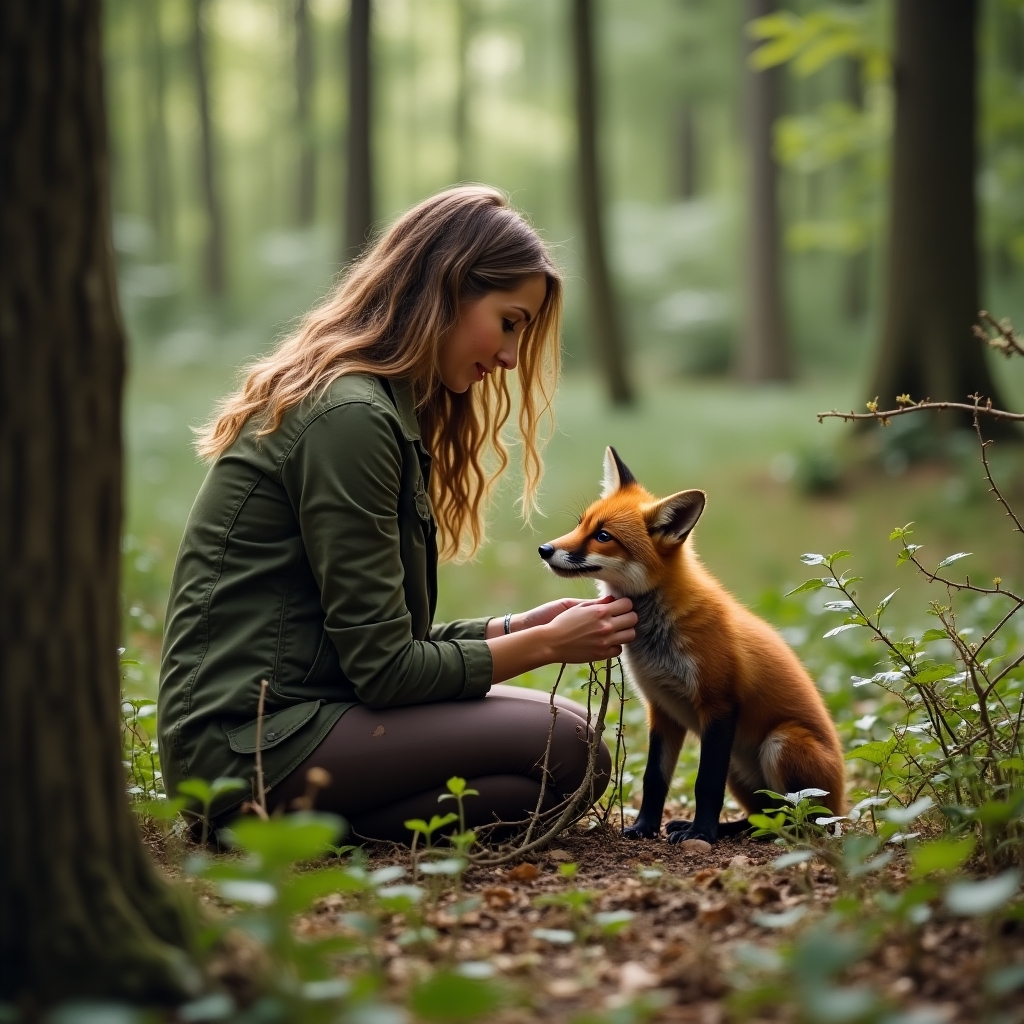
    As she wandered deeper into the woods, lost in thought, she almost tripped over something. A flash of movement caught her eye—a fox, russet and sleek, stood not far from the path. Its gaze was fixed on her with an intensity that was unsettling.

    “Shoo,” she whispered instinctively, stepping back. Her heart raced, a primal fear mingling with curiosity. But the fox did not move. Instead, it took a small step forward, its eyes never leaving hers.

    Ella hesitated. There was something in its eyes—an urgency, a plea. Her rational mind told her to walk away, leave nature to its own devices. Yet, the fox’s silent entreaty pulled her in.

    “What do you want?” she muttered, feeling foolish talking to a wild animal.

    The fox turned and began to trot away, pausing once to look back at her. Ella’s feet moved before her mind could object, following the creature through the underbrush, away from the trail.

    As they moved, the forest seemed to close around them, each step taking Ella further into a world untouched by human hands. The fox led her to a small clearing, where the sound of whimpering reached her ears.

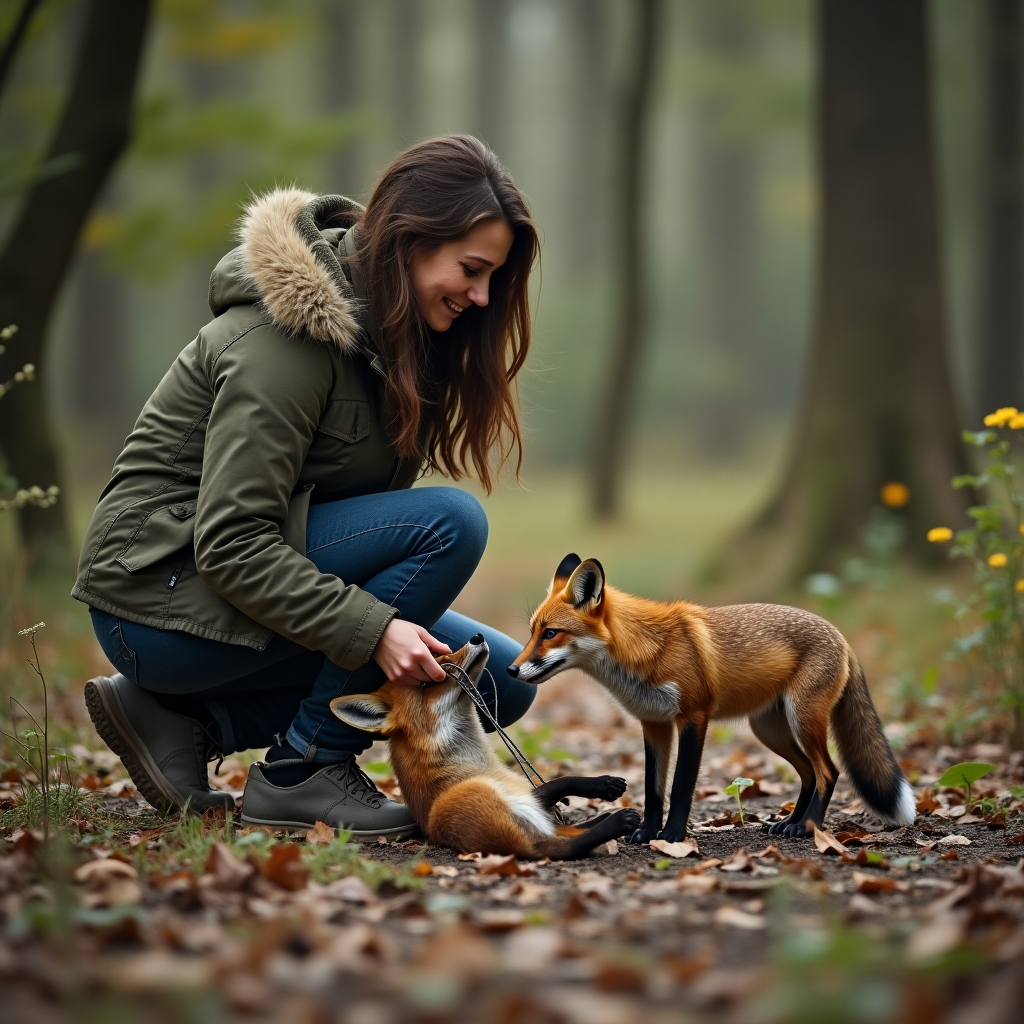
    There, beneath a tangle of thorns, lay another fox, its leg trapped in a hunter’s snare. Ella’s heart clenched. The injured fox, smaller and with a gentler face, looked at her with eyes full of pain and trust.

    The standing fox, the mother, nuzzled its mate with a soft whine. Ella’s fear evaporated, replaced by a surge of determination. She knelt beside the injured fox, speaking softly as she assessed the situation.

    “Okay, okay, I’ve got this,” she murmured, more to herself than to the animals. With careful hands, she worked to loosen the snare, her fingers trembling from more than just the cold.

    The mother fox watched intently, her presence a steady reassurance. Finally, with a soft click, the snare released its grip. The injured fox limped free, its eyes meeting Ella’s in a moment of profound connection.

    “You’re going to be okay,” Ella promised, tears stinging her eyes.

    The mother fox licked its mate’s face, a gesture of comfort. Slowly, they turned and disappeared into the underbrush, leaving Ella alone in the clearing.

    She stood up, her heart full, her perspective irrevocably altered. The connection she felt with these creatures had bridged a gap she hadn’t known existed.

    Later, as she made her way back to the cabin, Ella knew that she would fight to preserve this place, not just for herself, but for the wild lives it sheltered. She had seen the depth of animal emotion and intelligence, and it had changed her forever.

  • The Chain of Command: Breaking Free from Gran’s Rule

    The Chain of Command: Breaking Free from Gran’s Rule

    All it took was one canceled holiday for us to finally see Gran’s true colors. We had prepared for our long-awaited trip to the mountains, a much-needed escape from the bustling city life. Tickets were bought, bags were packed, and the kids were ecstatic. But Gran had other plans.

    “I can’t believe you’re serious.” Sarah’s voice quivered as she faced Jack, her husband. His mother, Evelyn, had just announced that the family would cancel their trip because she needed them to stay home for a last-minute social dinner she had arranged.

    “It’s just this once,” Jack sighed, his voice barely reaching above a whisper. His eyes betrayed his inner conflict. “You know how she gets.”

    Sarah clenched her fists under the oak dining table, her polite smile never faltering. “This makes it the third ‘just this once’ this month,” she replied, trying to mask her frustration.

    Evelyn, with her impeccably styled hair and an air of aloof command, looked at Sarah from her seat across the room. “Family should always come first, dear,” she said, her tone soft but sharp like the edge of a blade. “You can always go on these little trips, but my dinner is important.”

    The emotional strain was palpable. Jack felt trapped between the love for his wife and the obligation towards his mother, who had an uncanny ability to manipulate every situation to her favor. Their family had always tiptoed around Evelyn’s authoritarian ways, yielding to every demand with gritted teeth and forced civility.

    As the days passed, the canceled holiday became a symbol of the mounting tensions. Sarah found herself recounting the many instances where Evelyn’s meddling had left a mark on their lives. The time she’d rearranged their home, enforcing her tastes on their decor; when she’d overstepped during their daughter’s schooling decisions; and now, this.

    The breaking point came one evening when Evelyn, unannounced as usual, decided to tidy up their home. She had found Sarah’s journal, the one place where she poured out her heart, and read it. The invasion was too much.

    “This is not okay!” Sarah’s voice boomed through the living room, her eyes glazed with tears of frustration and betrayal. “You had no right, Evelyn!” She gestured wildly, her journal clutched tightly in her hands.

    Evelyn looked taken aback, though her surprise quickly faded into indignation. “I was just trying to help, Sarah. You’re clearly overwhelmed and—”

    “No,” Jack interjected, his voice steady and firm. “You’ve crossed the line, mother. This is too far. You can’t keep doing this.”

    The confrontation was raw and emotional, and for the first time, Jack stood unwaveringly with Sarah, drawing a line that Evelyn could no longer cross.

    The resolution was bittersweet but liberating. They set firm boundaries, making it clear that their family’s choices were their own. Jack and Sarah finally booked another holiday, a testament to their reclaimed independence and unity.

    In the weeks that followed, Evelyn’s presence in their lives shifted. She became a part of their family, but no longer the one holding the chains.

    The young family thrived, basking in the freedom to grow and make their own decisions, together.

  • The Bridge Over Fear

    The Bridge Over Fear

    Amidst the rustle of the autumn leaves, Emma found herself staring into the emerald eyes of a fox, its gaze unnervingly intelligent, pleading yet cautious. She hesitated, her mind racing with disbelief — this wild creature was beckoning her for help.

    Emma had always enjoyed her solitary walks through the tangled woodland that lay just beyond her backyard. Today, however, was different. The steady crunching of leaves beneath her feet was interrupted by an unusual stillness. She was about to dismiss it as her imagination when, from the corner of her eye, she saw movement — a fox, unusually bold, was approaching her.

    The fox was small and its coat dull, likely the struggles of a harsh season, but what struck Emma were its eyes, fixed intently on her. The creature whined softly, taking tentative steps backward into the thicket, before pausing to ensure Emma was watching.

    “What do you want?” she whispered, feeling foolish for speaking to an animal. She chuckled nervously but couldn’t shake the feeling that this encounter was no coincidence.

    The fox paused, its ears flicking as if to capture every word. Then it turned and darted into the underbrush. Emma’s heart pounded. Years of warnings from her parents echoed in her mind about the dangers of wild animals and the stupidity of following them. Yet, something in her gut told her this was important.

    “Wait!” Emma called out, surprising herself with the strength in her voice. She pushed through the brambles, unsure of what she’d find or why she felt compelled to obey the fox’s unspoken request.

    Branches whipped her arms as she stumbled after it, her breath coming in quick gasps. She nearly turned back several times, plagued by self-doubt and fear. But each time, the fox would pause, looking back at her, eyes steady and inviting.

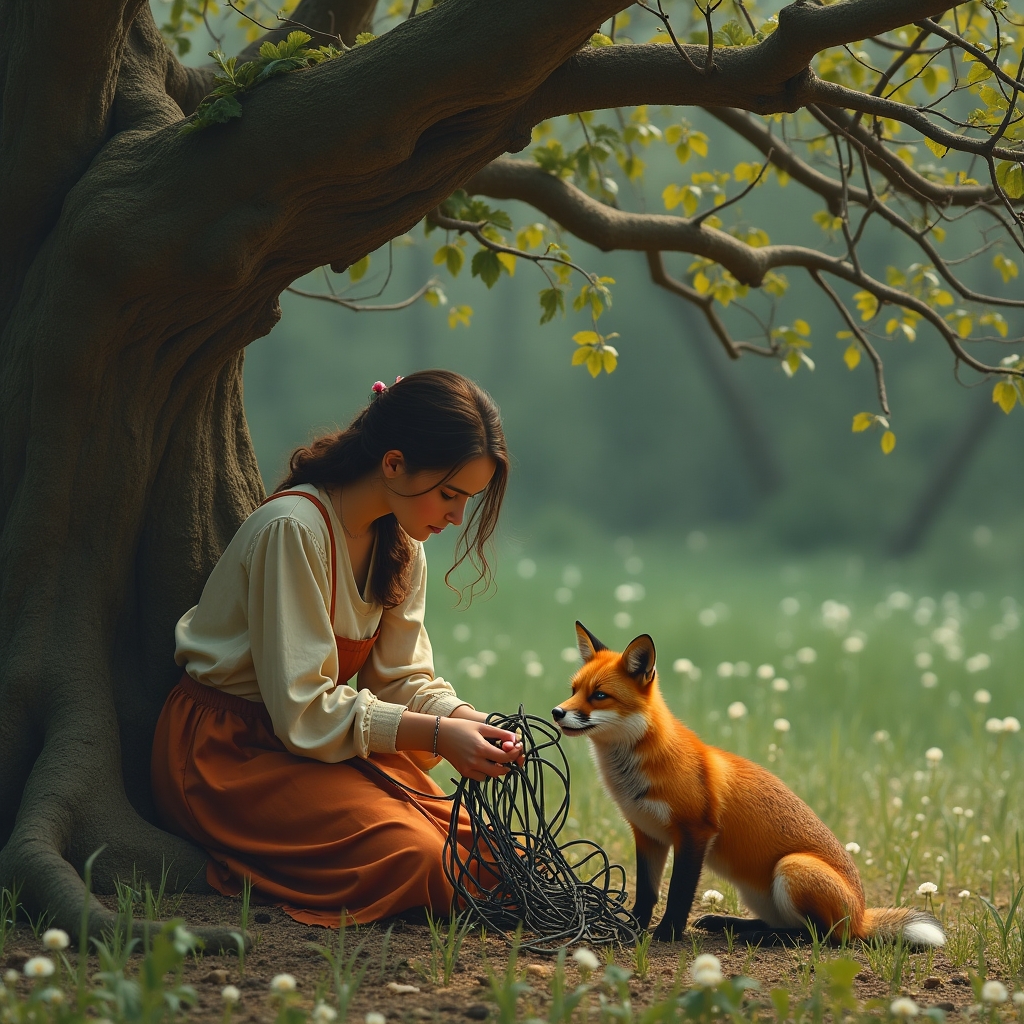
    Finally, they reached a clearing where a soft whimper drew Emma’s eyes to the base of an ancient oak. There, caught in a mess of old wire and debris, lay a smaller fox, its paw ensnared in a painful trap. The pleading fox nuzzled the trapped one gently, its anxiety palpable.

    Emma’s heart ached at the sight. “Oh God,” she whispered, her determination solidifying. She inched closer, her hands trembling as she tried to soothe the frightened animal with her voice before carefully working to free it.

    The task was daunting, each tug at the wire met with a worried growl from the trapped fox. But Emma persisted, her fingers working delicately until, finally, the trap gave way.

    Freed, the young fox scrambled to its feet, joining its companion. The two nuzzled briefly before turning to look at Emma. In those moments, Emma felt an overwhelming sense of connection, her fear and hesitation replaced by a warm empathy.

    She watched as the pair disappeared into the trees, their silhouettes vanishing like whispers among the leaves. Emma stood alone in the clearing, her outlook transformed. She understood now that compassion transcends boundaries and that the eyes of an animal can indeed be a bridge to understanding.

    Emma returned home that day with the forest as her ally and the foxes as her silent teachers, realizing that sometimes, the wild comes to us not to take, but to offer a lesson in trust and empathy.

  • The Ties That Unbind: Breaking Free from the Iron Grip

    The Ties That Unbind: Breaking Free from the Iron Grip

    All it took was one canceled holiday for us to finally see Gran’s true colors. Last summer, we had been looking forward to our first real vacation as a family, a week at the seaside where our twins could run free, and we could finally breathe. But Gran had other plans. “The garden needs tending. Who else will do it?” she insisted, despite our gentle protests. Her words were sharp like the garden shears she wielded, pruning away the freedom we craved.

    I am Sarah, and for years, we have lived under the weight of Gran’s expectations. My husband, Tom, and I have often exchanged looks over dinner—those secret signals that scream of frustration while maintaining the facade of familial harmony. Her domineering presence was as fixed in our lives as the ivy she let creep over her garden walls.

    Gran’s interference was never subtle. Her demands were wrapped in the guise of care. “I’m only thinking of what’s best for you,” she’d say, her tone coated with sweet poison. Each visit meant cutting short our plans, each suggestion a veiled order. And each time, we acquiesced, our polite smiles barely concealing the tension that pulled us taut.

    The breaking point came when she destroyed the art supplies we had bought for the twins—”A waste of money,” she declared. The twins’ crestfallen faces were a mirror of my own heart breaking. It was then Tom and I knew we had to act.

    A Sunday dinner, Gran’s favorite chance to meddle, became the stage for our rebellion. “Gran,” Tom began, the tremor in his voice betraying his resolve, “We need to talk.”

    “About what, dear?” she asked, not even looking up from her knitting.

    “You can’t keep making decisions for us. We’re not children,” he said, his voice growing stronger.

    The room seemed to contract around her, her eyes narrowing like a hawk on prey. “I have always done what’s best. You wouldn’t last without me,” she spat, the veneer of sweet elderly care falling away.

    I stepped forward, feeling the surge of unaccustomed courage. “We appreciate everything you’ve done, but it’s time we stood on our own. We’ve canceled the gardening day. We’re taking the kids on holiday.”

    Her face hardened, and for a moment, a flicker of hurt crossed her features. But beyond that, a grudging respect seemed to surface. “Well,” she huffed, “let’s see if you can manage.”

    The moment was electric, a turning point that turned us from marionettes into masters of our fate. Our decision, though not without its costs, had liberated us. The chains had broken, and our family felt whole and unbowed for the first time.

    As we left her house, the twins skipped ahead, free and joyful under the open sky, their giggles a sweet symphony of newfound independence. Tom and I walked hand in hand, our smiles real, our spirits light.

    We had finally claimed the freedom to live our lives and make our own choices—a victory that felt as vast and deep as the ocean we were heading for.

  • The Cost of Ambition

    The Cost of Ambition

    Lucas had dreamt of being a top executive ever since he was a kid playing with Lego blocks, but as his professional world expanded, the space for his personal life shrank. Each success was a step further away from the family he loved but rarely saw.

    At first, it was invigorating. Lucas thrived on the adrenaline of board meetings, the challenge of landing big contracts, and the power that came with his growing influence. But with every late night at the office, his wife Sarah’s messages became less frequent, and the laughter of his daughter Emma faded into a distant memory.

    “When will you be home? Dinner’s getting cold,” Sarah would text, a hint of frustration in the words.

    “Soon! Just one more call,” Lucas would reply, often knowing it was a promise he couldn’t keep.

    Weeks turned into months, and the tension in his household only grew. One morning, over a hurried breakfast, Sarah looked him straight in the eye. “Lucas, when was the last time you made it to one of Emma’s soccer games? Or even a family dinner? We miss you.”

    “I’m doing all this for us, for our future,” Lucas responded, defensive yet wearied.

    “But what kind of future are we building if we’re not together to enjoy it?” Sarah’s voice cracked, and with that, she left the table.

    Lucas buried himself deeper into work, convincing himself it was temporary. The big project he was working on could secure a lifetime’s worth of security. The pressure was immense, but the thrill of the chase kept him going.

    Then came the day of the project’s final presentation—a career-defining moment. As Lucas stood in front of the board, ready to deliver, his phone buzzed incessantly. Avoiding it at first, he finally glanced at the screen to see multiple missed calls and a message that froze his heart: “Emma’s hurt. Hospital.”

    His mind raced. His heart pounded. The room spun as he faced a pivotal choice: stay and secure his future or rush to his daughter’s side. In that moment, the reality hit him—was this the cost of ambition?

    “Excuse me,” Lucas uttered, barely audible, before leaving the stunned boardroom behind.

    At the hospital, Lucas found Sarah, her eyes filled with a mixture of relief and unshed tears. Emma was okay, just a broken arm from a fall at school, but it was a wake-up call he couldn’t ignore.

    “I’m sorry,” Lucas whispered, holding Sarah and Emma tightly. “I’m so sorry.”

    That night, he made a decision. He stepped down from the project, turning away from the immediate promotion, choosing instead to rebuild the bonds he nearly lost.

    Though his career took a hit, Lucas found himself more present at home and happier than he’d felt in years. Success, he realized, meant nothing if he lost the people he cared for most.

    As he tucked Emma into bed, she asked, “Daddy, will you be there for my game tomorrow?”

    “I wouldn’t miss it for the world,” Lucas replied, meaning every word.

    Lucas’s story became a testament to making choices that truly matter, learning the hard way that ambition could wait, but loved ones might not.

  • Whiskers of Hope

    Whiskers of Hope

    The Johnson house had once echoed with laughter, but lately, silence was its most frequent guest. Claire and Mark Johnson had been drifting apart, tangled in a web of unspoken resentment. Their ten-year-old son, Ethan, often tiptoed through tense rooms, seeking solace in the one family member who never changed—Mittens, their gentle gray tabby.

    Mittens had been with the family for eight years, a time capsule of happier days. She seemed to have a sixth sense about human emotions, curling up beside Claire during her quiet moments of tears or sneaking onto Mark’s lap when he lingered too long in his stress-filled thoughts.

    The cold November wind howled outside as Claire sat at the dining table, staring blankly at a pile of unpaid bills. Mark entered, his expression mirroring hers—tired and distant.

    “The car’s making that noise again,” he muttered, avoiding her eyes.

    Claire nodded, her gaze fixed on the window. “I’ll call the mechanic tomorrow.”

    Their conversations had become mechanical, devoid of warmth or connection. But as Ethan bounded into the room, he carried a different energy—concern.

    “Mom, Dad, I can’t find Mittens,” he said, voice quivering.

    Both parents snapped to attention. Mittens never wandered far from home. She was as much a creature of habit as they were.

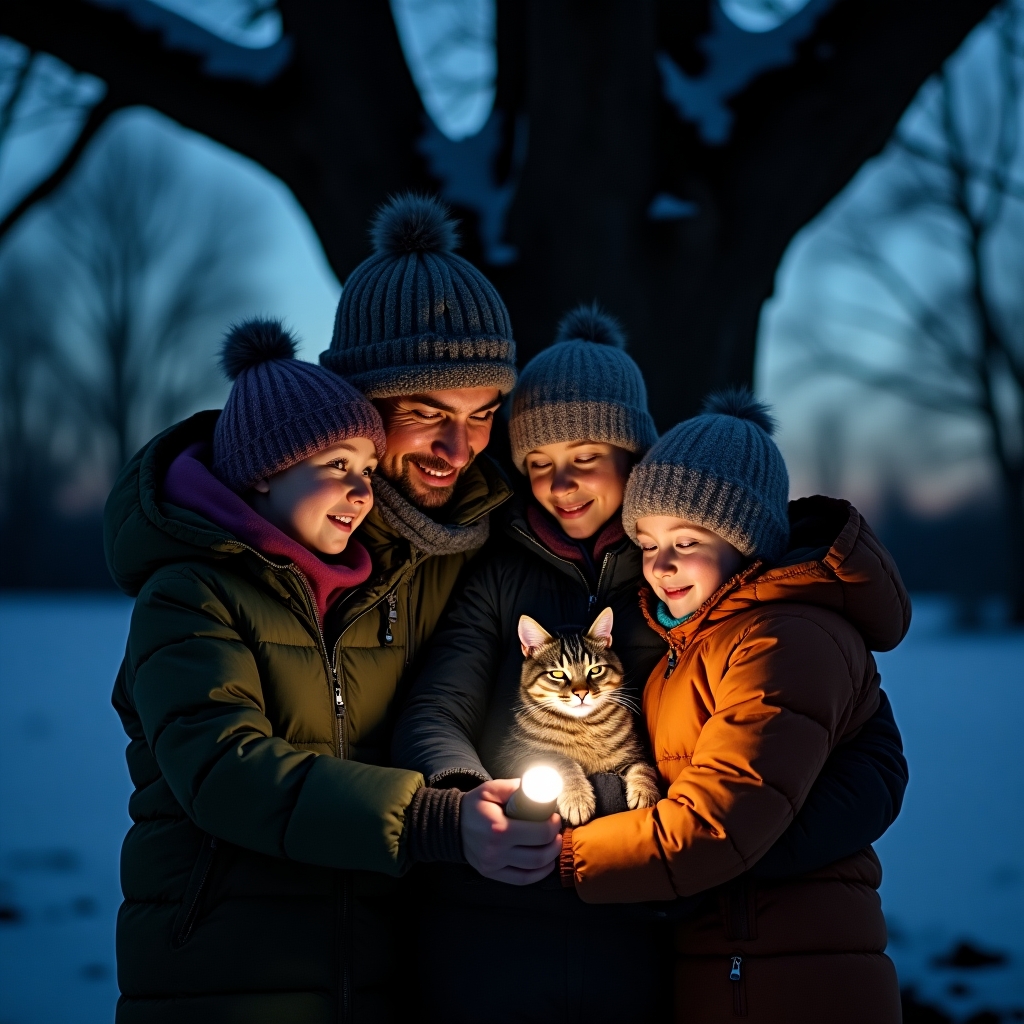
    For the first time in months, Claire and Mark found themselves united in purpose. Grabbing flashlights and donning coats, they followed Ethan into the chilly evening, calling out for Mittens as they combed the neighborhood.

    As they searched, memories flickered. Mark recalled the day they brought Mittens home, her soft purrs and playful antics immediately filling their hearts with joy. Claire remembered the time Mittens curled up beside her belly when she was pregnant with Ethan, as if aware of the new life growing within.

    Their shared memories cut through the fog of resentment, reminding them of a time when they faced the world together, not as adversaries.

    “Mark,” Claire said quietly, breaking their silence. “I miss how we used to be.”

    He paused, looking at her with a vulnerability he hadn’t shown in ages. “I miss that too.”

    Their search continued until they heard a faint meow near the old oak in the park. Rushing over, they found Mittens, her paw caught in a trap meant for small wildlife.

    Gently, Mark freed her, cradling the trembling cat in his arms. Ethan hugged his parents, relief and tears mingling on his cheeks.

    As they headed home, Mittens safe in Mark’s arms, the emotional distance between Claire and Mark seemed to shrink. They didn’t need to speak; the shared relief and gratitude formed a bridge between them.

    That night, as Mittens slept soundly on Ethan’s bed, Claire and Mark sat together in the living room, their fingers entwined.

    “I think we can fix this,” Claire whispered.

    Mark nodded, a smile touching his lips for the first time in what felt like forever. “For Ethan. For Mittens. For us.”

    The loss and find of Mittens hadn’t just reunited a family with their beloved pet; it had reignited the connection between Mark and Claire, reminding them of the love that still existed beneath layers of hurt.

    And so, in the heart of their home, hope began to bloom once more.

  • Shattered Vows: A Silent Resurrection

    Shattered Vows: A Silent Resurrection

    On what was supposed to be the happiest day of her life, she discovered a forgotten letter tucked inside his coat pocket. The words scrawled within spoke of promises exchanged with another, a future they had planned without her in it. Her heart clenched, a sudden vice of disbelief, as the room spun around her, the echoes of his laughter with that other woman ringing in her ears.

    Maya stumbled back from the revelation, her eyes burning with unshed tears as she confronted the man she thought she knew. “How could you?” Her voice was a whisper, a ghost amidst the bustling crowd that filled their engagement party.

    He looked at her with a feigned innocence, his expression shifting from surprise to practiced apology. “Maya, it’s not what you think,” he began, but she held up a hand, silencing him.

    “Not what I think? This letter is in your handwriting, Liam. It’s your future laid bare here, without me.” Her voice cracked, and the room around them felt smaller, the walls closing in.

    Liam faltered, his silence confirming what she already knew. The betrayal was complete, a blade thrust deeply into the heart of their three-year relationship. Her friends, oblivious to the turmoil, laughed and toasted around them, but Maya felt detached, an observer misplaced in her own life.

    The days that followed were a blur of grief and introspection. Maya found herself moving through the motions, the vibrant colors of her world dulled by the shadow of betrayal. Nights were the worst, the silence a mocking companion to her broken heart.

    Yet, in that silence, something else began to take root. A quiet strength, a spark of determination she hadn’t realized existed. She began to journal her thoughts, pouring out her pain and reframing it as lessons learned.

    One evening, as the sun dipped below the horizon, she met Liam to return his belongings. The setting sun painted the sky in hues of orange and pink, a stark contrast to the cold resolve that settled within her.

    “Maya, I’m really sorry,” Liam started, but she interrupted him, her voice steady, clear.

    “Liam, I don’t need your apologies. I needed honesty, commitment, and love, which you couldn’t give.” She paused, meeting his gaze with unwavering strength. “I deserve better than deception. I deserve someone who truly cherishes me for who I am.”

    With those words, she turned away, leaving him with a finality that could not be undone. The weight on her shoulders lightened with each step, her heart mending as she embraced her newfound strength. In that moment, Maya discovered something beautiful—her own self-worth was unyielding, a constant she could depend on.

    The betrayal had not broken her but instead sculpted her into someone resilient, compassionate, and fiercely independent. She was her own hero, and that realization was more powerful than any love she had ever known.

  • The Bridge of Silent Understanding

    The Bridge of Silent Understanding

    In the early hours of dawn, Sarah was awakened by a persistent scratching at her back door. Through the window, she could see a pair of intense, amber eyes peering back at her. It was a young fox, its fur matted and eyes wide with urgency. Despite living on the edge of the forest for years, Sarah had never been this close to such a wild creature. It seemed to defy its own instincts, standing there, waiting.

    As she tentatively opened the door, the fox stepped back, letting out a faint whine. Sarah’s heart raced. She felt the tug of fear and a nagging sense of curiosity. Why would this fox, of all the creatures in the woods, come to her? The fox turned, moved a few steps away, and looked back at her—silent but imploring.

    “What is it, girl?” Sarah muttered, half to herself. The fox trotted forward a few paces and paused again, looking back with that same compelling gaze. “Okay, okay,” Sarah sighed, grabbing her coat and boots. She felt foolish, yet something deeper urged her onward—the rare, unspoken trust in those eyes.

    As Sarah followed the fox, the forest closed around her, shadows playing tricks on her eyes. Doubts whispered in her mind. What if she was being led into danger? Yet, each time she hesitated, the fox sat patiently, waiting for her to continue.

    After what felt like hours but was only minutes, they arrived at a small clearing. An ancient oak loomed large, its roots twisted and bare. There, Sarah saw a tiny ball of fluff—a fox kit—trapped in a tangle of thorny vines. Its cries were faint, but filled the air with desperation.

    “Oh my God,” Sarah breathed, rushing forward. The mother fox stood aside, watching intently, as Sarah carefully untangled the vines, mindful of their sharp thorns. She could feel the little kit’s heartbeat, frantic beneath her fingers.

    “Almost got you,” Sarah murmured, gently freeing the last vine. The kit whimpered softly, and its mother moved forward to nuzzle it reassuringly.

    As Sarah stood, the mother fox looked at her, their eyes meeting briefly in a moment of mutual acknowledgment. There was a connection there—something pure and deep, transcending the usual barriers between human and animal.

    The fox family began to retreat into the forest. Sarah watched them disappear into the shadows, feeling a warmth blooming in her chest. She realized she had crossed an invisible bridge that morning, one crafted from trust and instinct.

    Returning home, Sarah felt the change in her heart. That morning, she had seen firsthand the intelligence and emotion of the animal world. No longer were they just creatures to be admired from afar; they were beings with families, fears, and needs.

    Sarah sat on her porch, sipping her coffee, the forest now a living, breathing tapestry she was part of. It was a reminder—a calling, perhaps—that sometimes, it takes a leap of faith to truly understand the silent bonds we share with the world around us.